How Indian Bank tapped Student Intelligence to shape its Digital Banking App
Most digital banking products are shaped inside rooms where the users are not always present.
Product teams study behaviour. Consultants compare features. Internal teams test flows and review screens. All of this matters. But for a new generation of banking users, especially those who move easily between fintech apps, e-commerce platforms, payment tools, and social interfaces, the expectations are sharper and less forgiving.
This was the context in which Indian Bank was developing its new omni-channel app. Rather than rely only on internal review or external benchmarking, the bank decided to bring the prototype closer to young users who could test it, question it, and study it through fresh eyes.
That decision became IND Ideathon, a live business case challenge where student teams from engineering and management institutions across India evaluated the app prototype, conducted primary user research, and submitted structured feature and design recommendations.
Poornatha came in as the Project Management Partner, designing the contest architecture and managing execution end to end.
Scale and Reach:
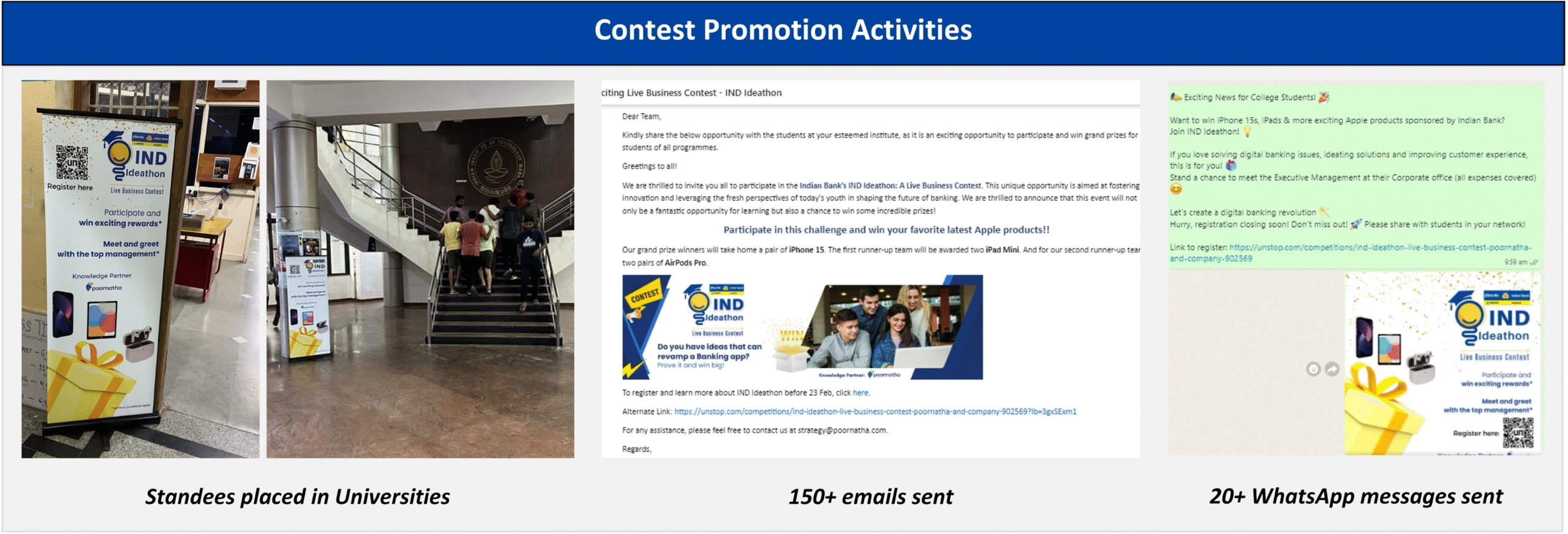
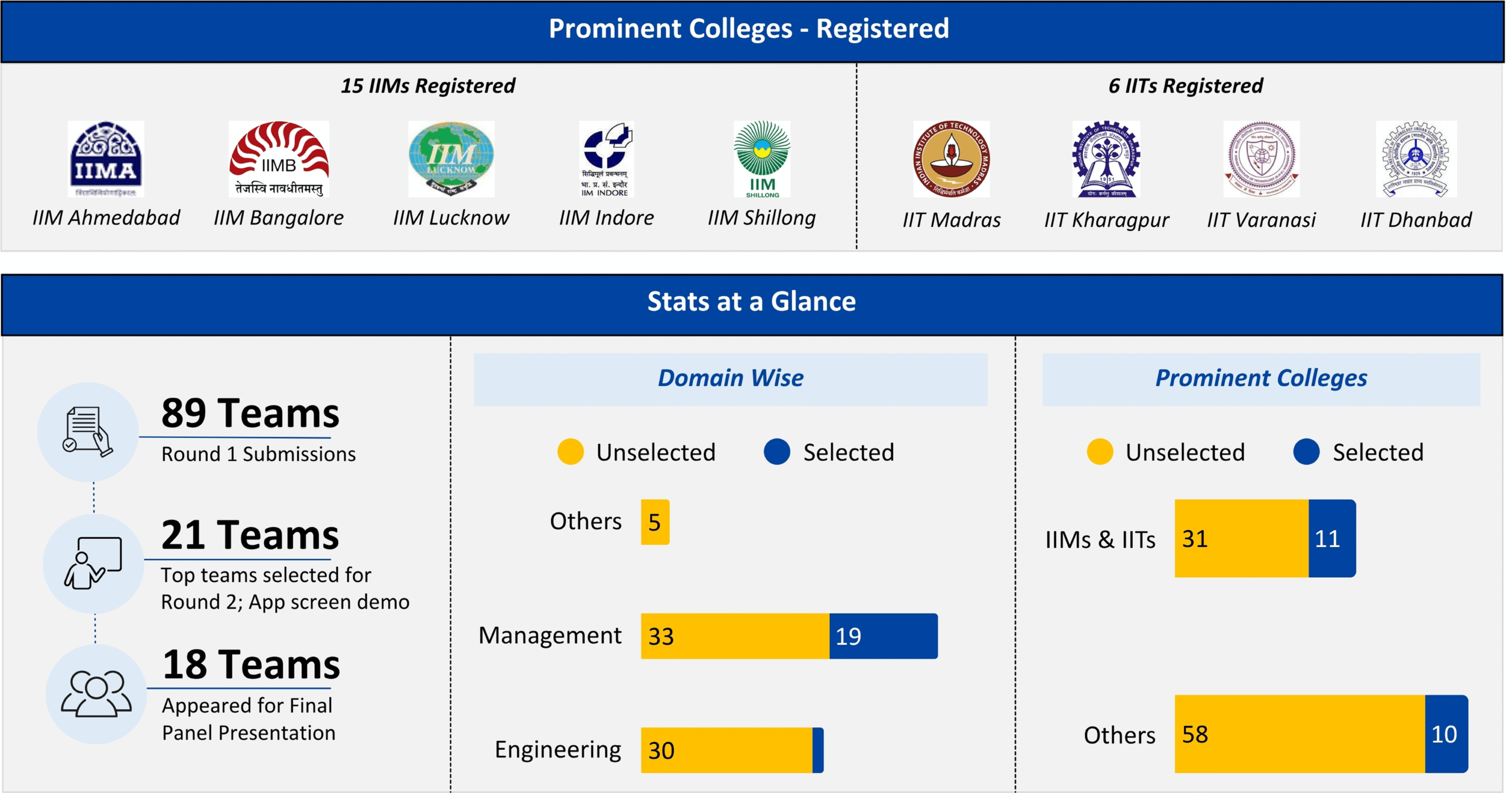
- 364 teams registered from 151 colleges, including 15 IIMs and 6 IITs.
- 245 teams were eligible to compete.
- Management students made up 63% of participants, engineering 31%.
- The contest drew teams from across the country, with Tamil Nadu alone accounting for 41 participating colleges.
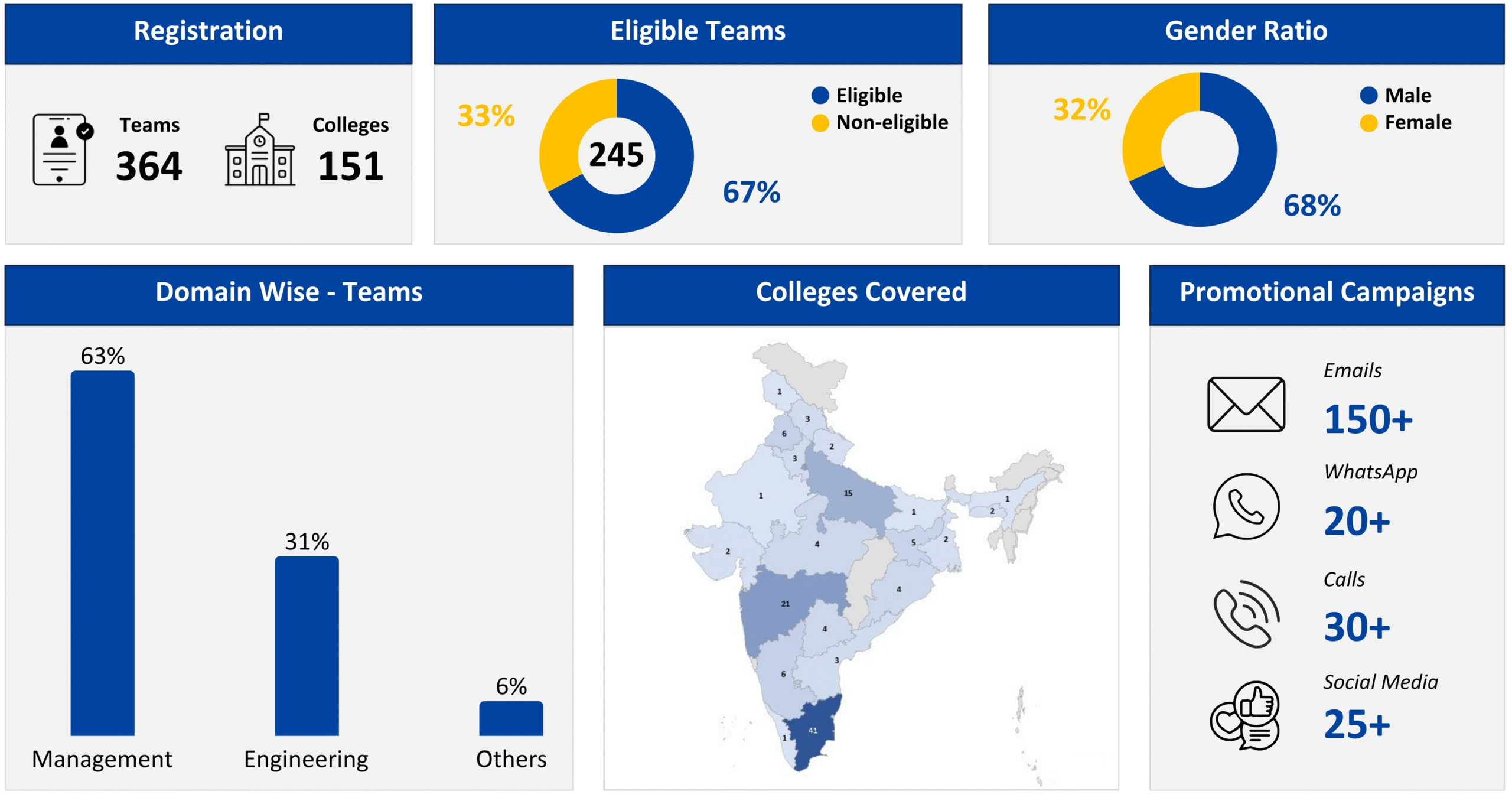
- Promotional outreach covered 150+ emails, 30+ phone calls, 20+ WhatsApp messages, and 25+ social media touchpoints.
How it was structured:
In Round 1, teams submitted three-slide concept presentations backed by early user research. 89 teams submitted. 21 advanced.
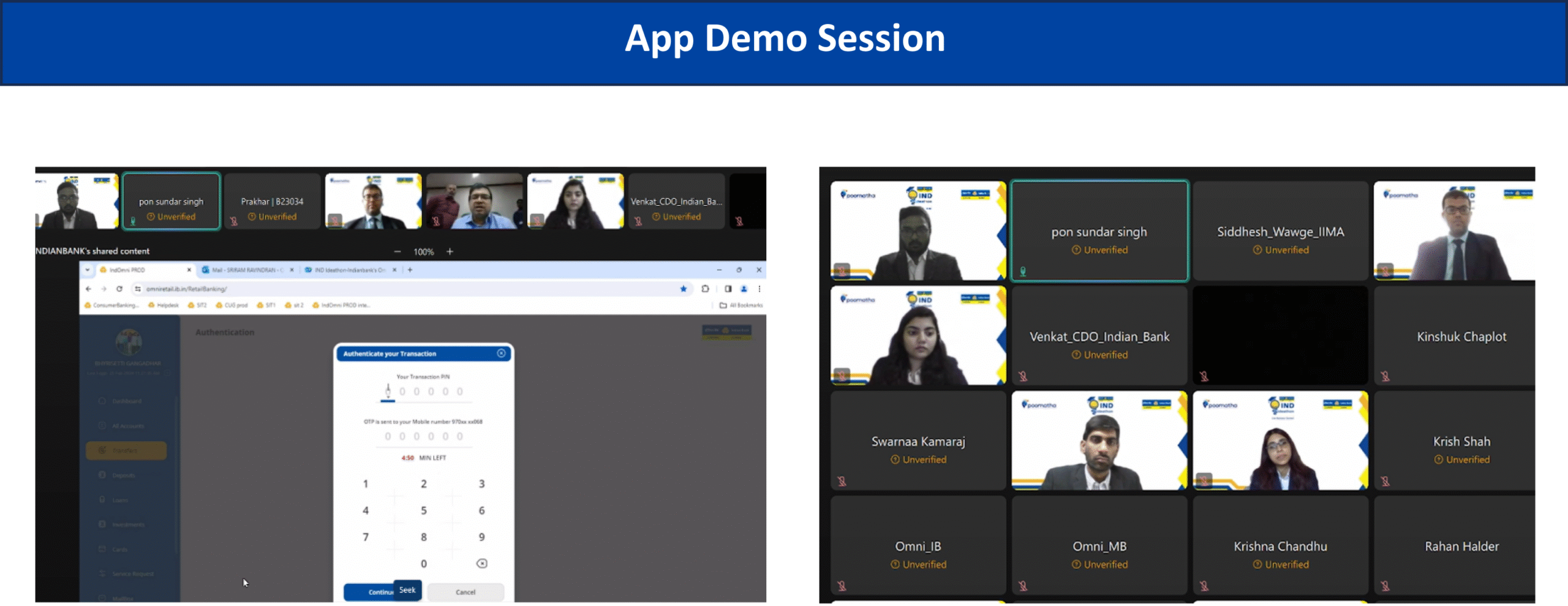
These shortlisted teams were given Close User Group access to Indian Bank’s prototype app, a controlled demo environment for direct usability review. They then completed deeper research, developed recommendations, and prepared final eight-slide presentations.
18 teams presented to senior Indian Bank executives on March 1, 2024. Winners were announced on March 8.
Teams were judged on customer research, UX/UI viability, and clarity of communication.
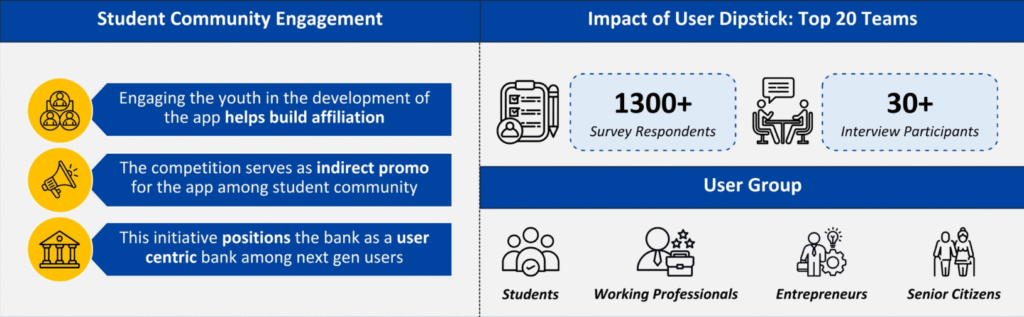
The top 20 teams collectively gathered 1,300+ survey responses and conducted 30+ user interviews. Their research included students, working professionals, entrepreneurs, and senior citizens, each with different expectations from a banking interface.
The result was not a list of UX preferences. Teams came in with user personas, segmented findings, and recommendations tied to observed behaviour.
What the teams delivered:
Standout ideas included:
- Spend analysers and budget managers
- Mini pouch for petty expenses
- QR scanner across payment flows
- Progress bars for underused app sections
- Voice-guided navigation and WhatsApp integration
- Gamified rewards and community features
Marketing ideas included corporate tie-ups, WhatsApp-based reminders, and in-app voucher systems inspired by e-commerce models.
What happened next?
The top three teams were awarded iPhones, iPads, and AirPods for their submissions. Each team demonstrated a strong grasp of customer needs, supported their recommendations with primary research, and proposed UX improvements that reflected both clarity and intent.

What Poornatha managed:
Poornatha managed the full contest lifecycle.
This included designing the evaluation rubric, drafting the challenge brief, onboarding colleges, running outreach, facilitating prototype access, supporting teams through submissions, coordinating the final panel, and preparing a consolidated recommendations report.
The full engagement ran for 23 days, from February 13 to March 8, 2024. Within that period, Poornatha managed 364 registrations, evaluated 89 Round 1 submissions, coordinated prototype access for 21 teams, and synthesised finalist recommendations for Indian Bank.
The Institutional Value:
Every participating team spent weeks engaging with Indian Bank’s product: testing it, researching around it, and discussing it with real users.
For a bank in the middle of a digital transformation, that kind of sustained attention from students across IIMs, IITs, and other institutions is hard to manufacture through advertising alone.
For institutions, the IND Ideathon model shows how a structured open innovation programme can produce primary research at scale, product feedback grounded in real user data, and consolidated recommendations within a defined timeline.
Poornatha designs large-scale engagement, learning, and research initiatives for banks and public institutions.
To explore a similar programme for your organisation, write to reach@poornatha.com